The cabinet looks wide enough. Then you meet the pipe, the valves, and the hinge that sticks out just far enough to ruin your plans.
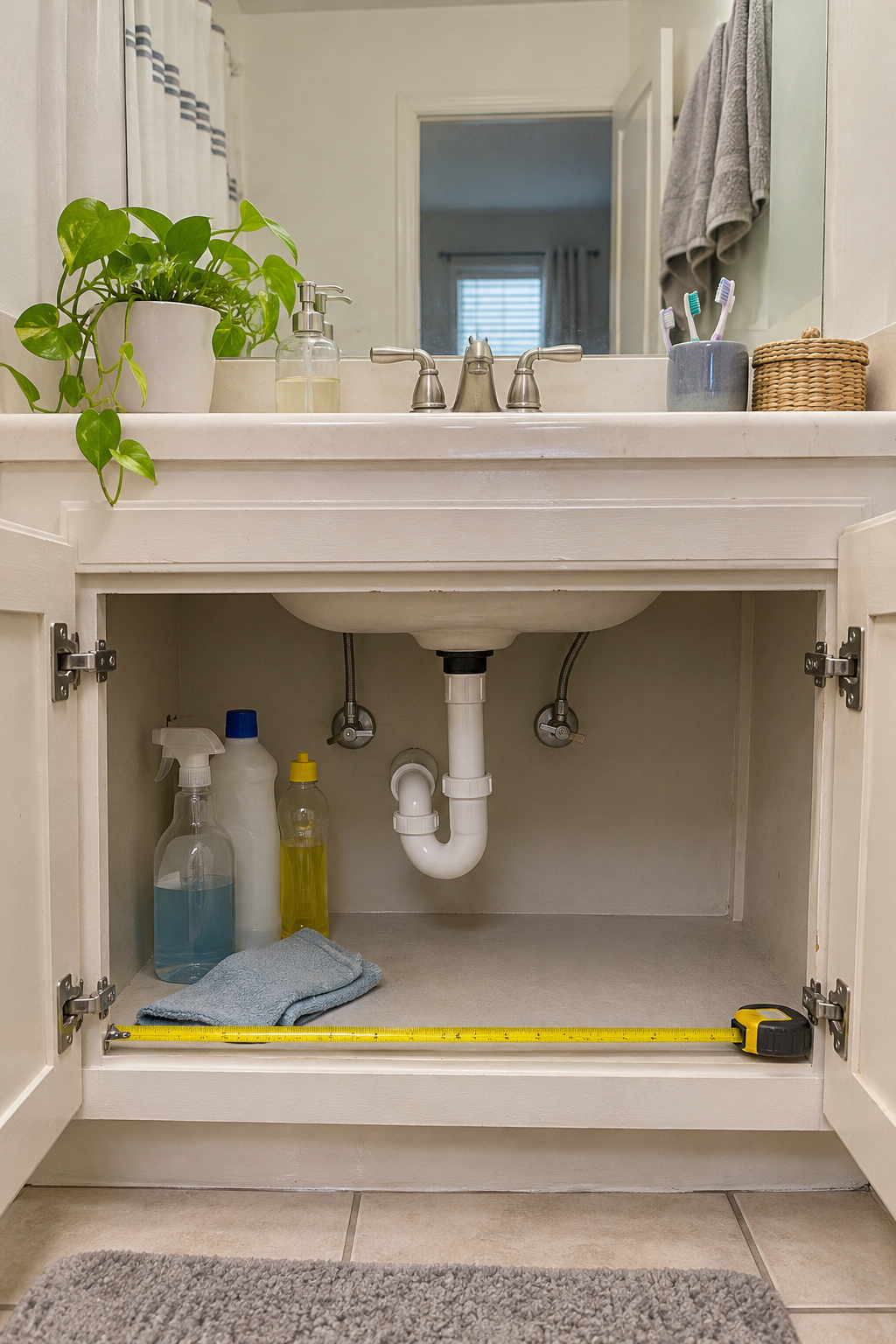
Picture the last five minutes before someone comes over. You reach for the bathroom spray, knock over a refill bottle, and find the spray behind the pipe where you left it last time. The cabinet has room for everything. It just takes too many moves to get to the one thing you need.
A Chinese home organizer described the kitchen version of this problem: the rice container lived deep in an L-shaped sink cabinet, so reaching it meant moving the pots in front every time. A separate buying guide shows how the direction of the drain trap can change where shelf panels fit. Those two details are a good starting point: empty the cabinet, map what the plumbing blocks, then see what you can reach without moving something else.
1. Measure the opening, the storage lane, and the pull-out path
- Opening width. Open the doors as far as they normally go. Measure between the parts that stick out farthest, including hinges, the frame, or a center stile. Check at both the base and the height of the proposed top shelf.
- Usable width, depth, and height. Measure from the inside of the closed door line to the first obstacle in each lane. Check the lowest part of the basin, the drain trap, hoses, and valve handles. For a two-tier shelf, repeat these checks at each proposed shelf height.
- Pull-out clearance. Cut cardboard to the organizer’s footprint and slide it in and out. Stand your tallest bottle on it and try to lift the bottle out with the door open. Check any front lip and the room in front of the cabinet against the product’s fully extended depth, if it has a drawer.
2. Pick the diagram that looks like your cabinet
A. Drain in the middle
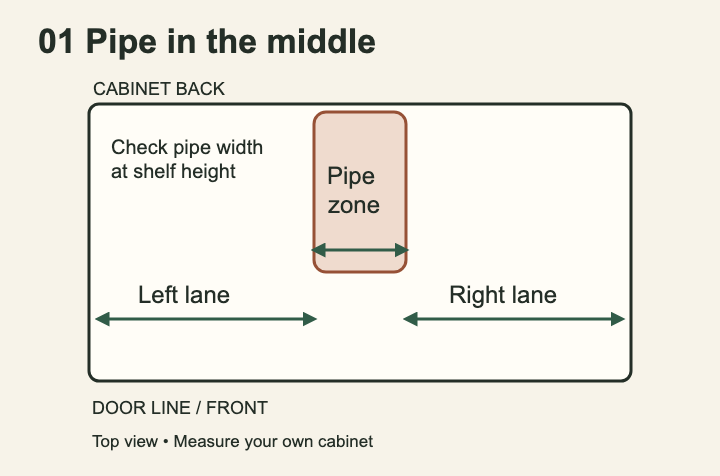
A removable-panel shelf can work here if its supports and crossbars clear the trap. Imagine keeping a box of dishwasher tablets on one side and spare sponges on the other. If a crossbar would still run into the pipe, use two separate bins.
B. Drain off to one side
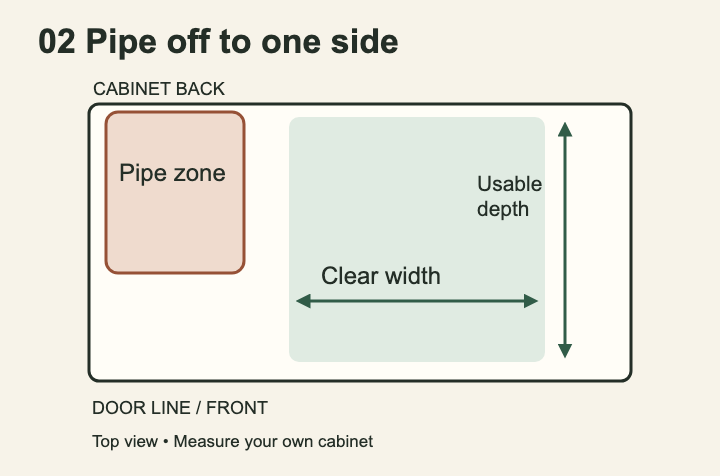
A clear lane on the opposite side is a good place for a rolling caddy. Put the spray and cloths you reach for every day at the front. Before buying, check that the caddy can pass the hinge with the spray bottle aboard and can cross any raised lip at the cabinet opening.
C. Pipes and valves across the back
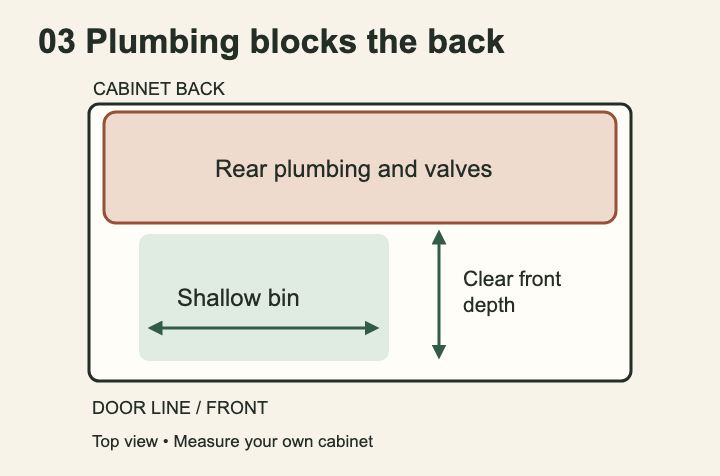
Use a shallow lift-out bin in front. Put the items you grab together in the same bin, such as a sponge and a small bottle of dish soap. If you have to take out the whole bin to reach a valve, use one you can lift with one hand and keep the route clear. Try a spare bin you already own before ordering.
3. Shop by the space you measured
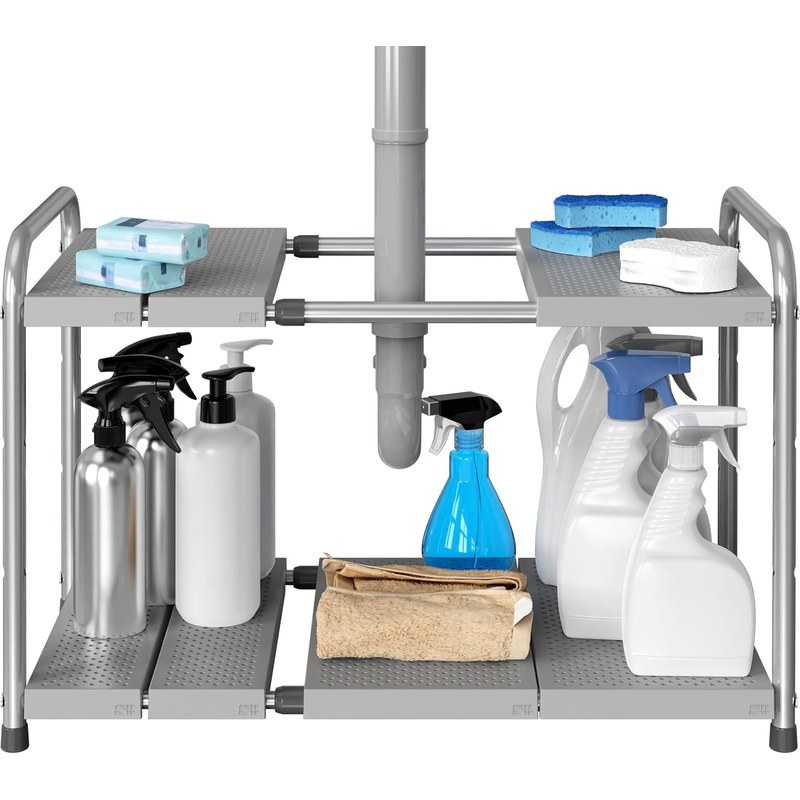
Center drain: Simple Houseware 2-Tier Expandable Shelf
15.75–25 in. wide × 11.75 in. deep × 15.25 in. high according to the model’s instructions. The individual panels lift out to leave a gap for plumbing. Check the support bars and bottle height before ordering.
View the silver shelf on Amazon · See the dimensions and panel layout
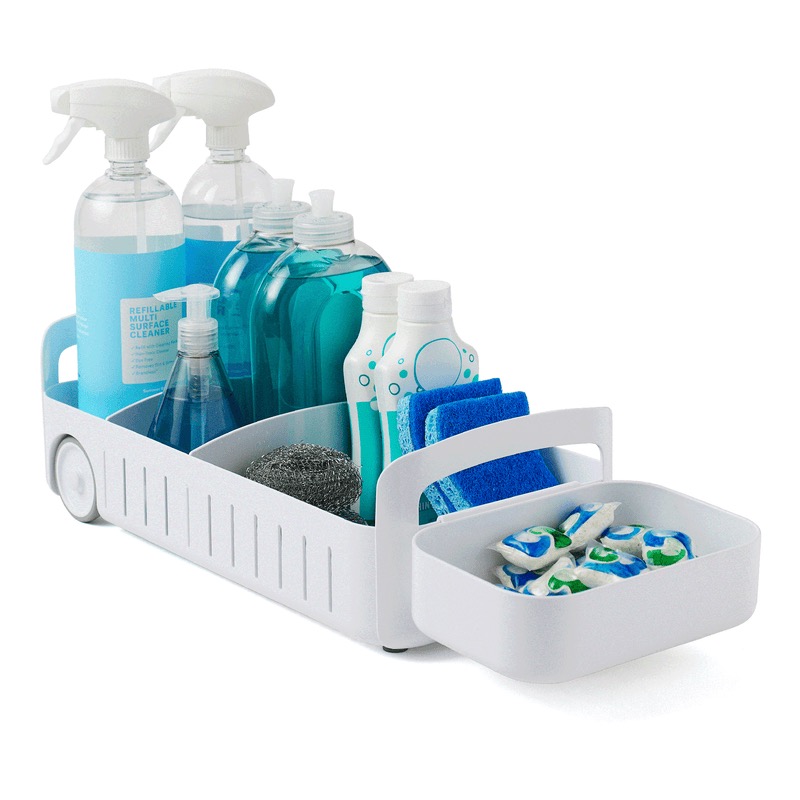
Side drain: YouCopia 8-inch RollOut Under Sink Caddy
Model 50261 measures 7.7 × 16.4 × 5.3 in. (W × D × H). The listed depth with the basket mounted at the end is 21.3 in. Leave room for the basket in its chosen position and for handles and bottle tops.
View the 8-inch caddy on Amazon · See YouCopia’s specifications

Blocked back: IKEA NOJIG lift-out bin
The beige 7¾ × 9¾ × 4 in. bin (item 204.681.05) can turn so its shorter side runs front to back. Check the opening for the resulting 9¾-inch width. The 4-inch sides are the bin height; check the loaded height separately.
Product photos show the listed models. Dimensions come from published product information. Shopping links are standard retail links.
Further reading (in Chinese): a comparison of under-sink shelf layouts and pipe clearance and a firsthand account of using a deep corner cabinet.