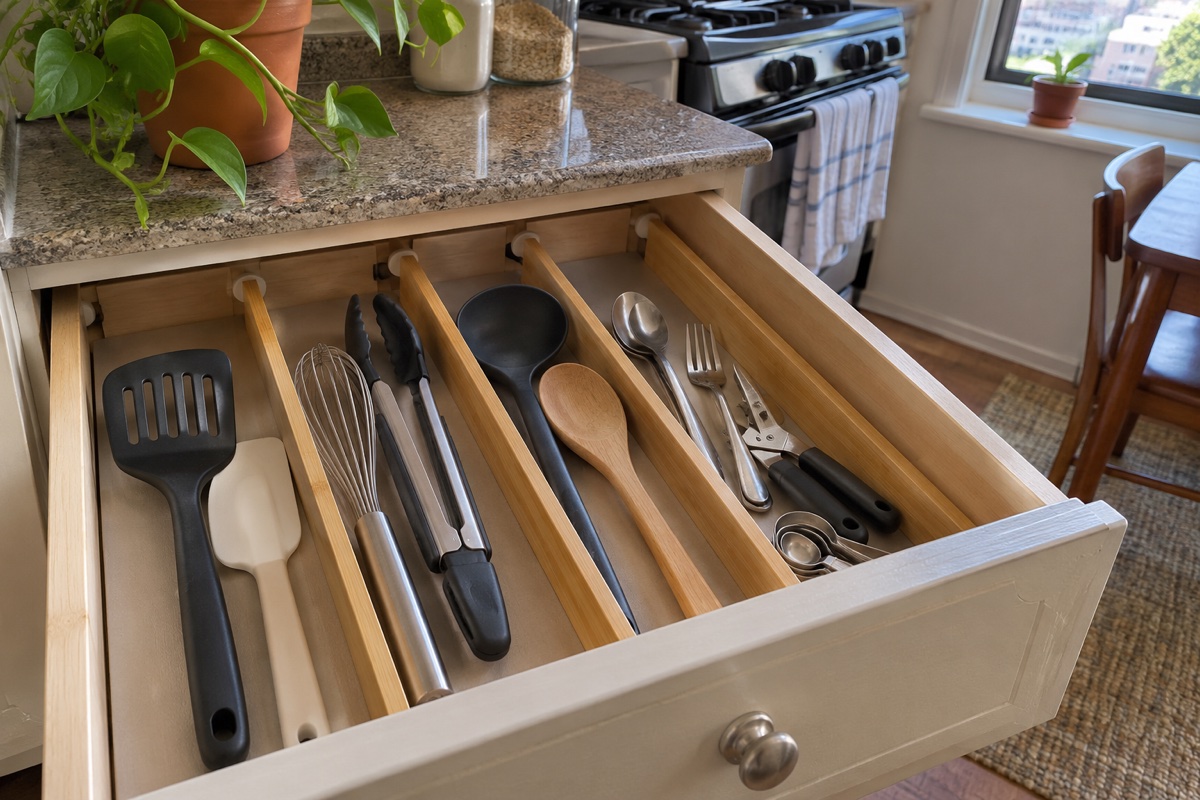
Dinner is already in the pan when the utensil drawer jams. A spatula has turned sideways, and the only way to open the drawer is to reach through the gap and nudge it flat. Start with that spatula when you decide what the drawer needs.
1. Set up one drawer for what you do every day
In a Bilibili tour of a one-person kitchen, the creator keeps noodles and dry goods apart from foil and food wrap, and repurposes bookends to hold packets upright. You can try the same principle at the utensil drawer: put the forks you grab at lunch where your hand lands first, then give the spatula and tongs a lane long enough for them to lie flat.
Fold a strip of cardboard to mock up a divider. Put it where you think it should go and open the drawer the way you do while cooking. Can you grab the tongs without lifting the cutlery tray? Move the line now, while it costs nothing.
2. Measure the span where the divider will press
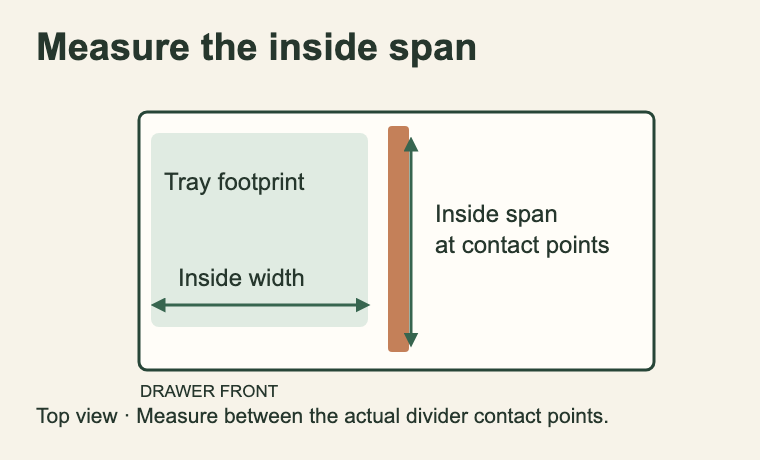
For a tray, record both inside dimensions and leave room for the longest utensil beside it. For a tension divider, measure in its direction of travel. A front-to-back divider needs the usable depth. A side-to-side divider needs the usable width. If the walls taper or curve, measure exactly where both pads will land. Set the divider according to the maker’s directions and check that it sits square.
3. Test the loaded height
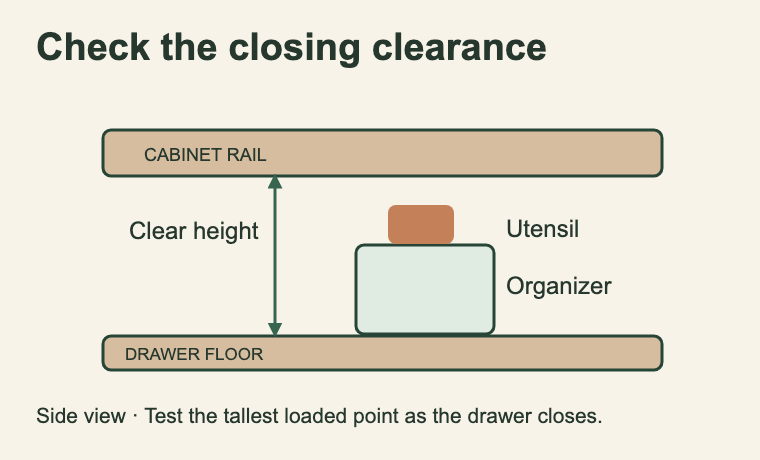
Measure up from the drawer floor to the lowest rail the organizer must pass under. Put the highest item in the cardboard mockup and close the drawer slowly. A fork handle angled up in a stacked tray or a ladle bowl leaning against the divider can catch even when the empty organizer clears. A 4-inch divider needs at least that much clear height before you add anything that sticks up.
Inside width, inside depth, closing clearance, and the length of your longest tool.
Recommended products
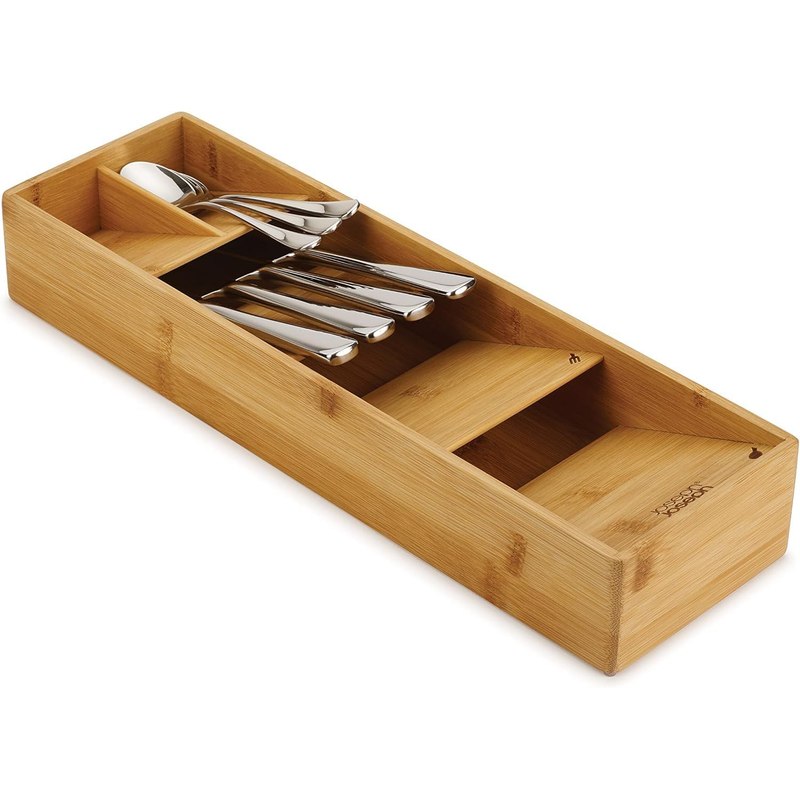
Joseph Joseph DrawerStore Bamboo Compact Cutlery Organizer (85168)
For everyday forks and spoons. The maker lists a 5 × 15¾ in. footprint and requires at least 3¼ in. of drawer height. Keep long spatulas in a lane alongside it.
View the bamboo tray on Amazon · View Bamboo DrawerStore at Joseph Joseph
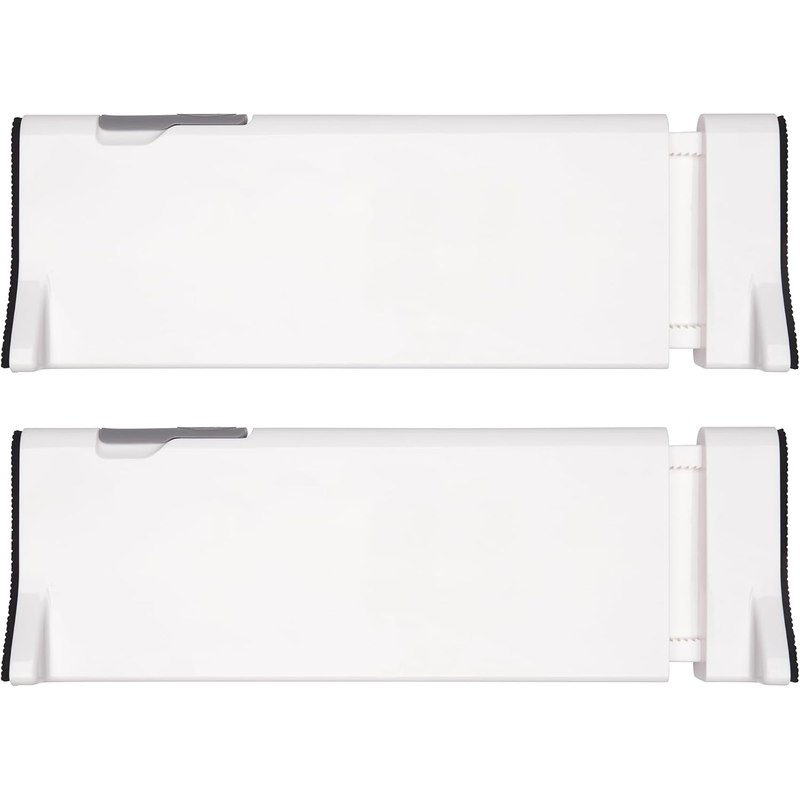
OXO Good Grips Expandable Dresser Drawer Divider Set (13227200)
For a deeper drawer with an 11–17 in. inside span. The dividers stand 4 in. high. Check closing clearance before you order.
View the divider set on Amazon · View the expandable divider set at OXO
Case reference (in Chinese): Bilibili kitchen tour by 贝壳里的24小时.
The product comparisons use published dimensions and installation information. The shopping links are standard retail links.